
Soil is relational
A collaboration among scientists, artists, and community members in Canada exploring new ways of being with soils
Territorial acknowledgement
(Re)mediating Soils is a multi-site research-creation project that works across many Indigenous territories now known as Canada. Our work has taken place on lands stewarded since time immemorial by diverse First Nations, Inuit, and Métis peoples, including Treaty and non-Treaty territories, urban Indigenous homelands, and sites of ongoing Indigenous governance.
We acknowledge that soil, land, and territory are not neutral research sites but living relations shaped by Indigenous laws, knowledge systems, and responsibilities that long predate settler institutions. We recognize the historical and ongoing impacts of colonization, land dispossession, and environmental degradation, and we affirm that these histories continue to shape the soils and communities with whom we work.
As a project committed to relational, community-engaged research, we understand land acknowledgement not as a statement, but as a practice. We strive to work in ways that are accountable to place, responsive to Indigenous priorities, and grounded in respect, reciprocity, and care for the lands and peoples who make this work possible.
How this work took root
Soils are being depleted worldwide, despite growing calls from scientists and policymakers to protect them. At the same time, humans are increasingly alienated from each other and from nature—from the rhythms, processes, and knowledges that govern life itself.
These conditions reveal the limits of biotechnical fixes, which remain the leading response to soil degradation.
Our project emerged from the recognition that protecting and restoring soils cannot be separated from protecting and restoring relationships—human and non-human.
Challenging the longstanding separation of nature and culture, we brought together researchers, artists, and community members around a shared problem: how to reconnect to soils as living foundations for care, reciprocity, and collective action.
Following are the three research questions that guide our work.
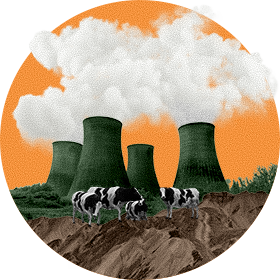
What kind of crisis is the soil crisis, and what does it reveal about human–soil relations?
We consider how framing soil degradation as a crisis of relation, rather than a purely biophysical problem, reshapes how we understand human–soil relations and responsibility.
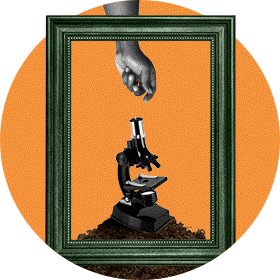
How do artistic, scientific, and community-based practices shape what we can know about soils?
We examine how different disciplines mediate soil knowledge by shaping what becomes visible, perceptible, and actionable across different scales.
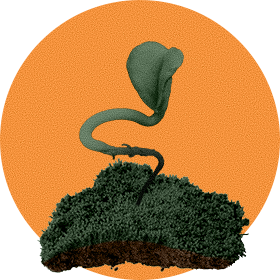
What kinds of care, responsibility, and collective action become possible when we understand soils as relational media?
We ask whether reframing soils as relational and living, rather than as inert resources to be managed changes our relationship to them.
As we try to answer these questions, we find more and more ways of being with soils. We dig soil pits, take samples, and make soil monoliths. We ask questions and search through archives. We paint, draw, plant, and dwell. Residencies, fieldwork, collaboration, exhibitions—these are all forms of research.
The project features five exhibitions across Canada that frame both soil and art as relations, not objects. Each exhibition builds on the former, making them cumulative. Like soils, the exhibition is both an archive and a living system.
These transdisciplinary exhibitions draw on collaborative fieldwork among artists, scientists, and community members to reframe the global soil crisis as a crisis of relation. Gathering works from three field sites—Yukon, Ontario, and Alberta—it invites visitors to explore soils’ complexity and singularity through deep sensory engagement and renewed practices of attention. As soil degradation is amplified by other complex social and ecological problems, new forms of perception, and sensibility are vital.
Lethbridge, AB
Field Notes
University of Lethbridge Art Gallery
Jan 30–Apr 4, 2026
Future Prairies
University of Lethbridge Art Gallery
Mar–Jun 2028
Whitehorse, YT
Storied Soils
Yukon Arts Centre
Jun 5–Aug 28, 2026
Hamilton, ON
Expanded Horizons
McMaster Museum of Art
Jan–Apr 2027
Woodstock, ON
Earth Lines
Woodstock Art Gallery
Oct 30, 2027–Feb 21, 2028
These exhibitions are spaces of attunement. They invite us to pay attention—look, listen, smell, feel. They invite us to start our relationship with soil anew.
“A handful of soil contains thousands of species all working for the quality of our lives.”
— Diana Wall